
L’Hiver Francophone au Canada de l’Ouest
While the Canadian province of Quebec is home to approximately 85% of all French Canadians, descendants of the French colony of Canada established in the 16th and 17th centuries, the Maritimes (New Brunswick, Nova Scotia, and Prince Edward Island) also are dotted with French Canadian communities. But Francophone culture à la canadienne is deep-rooted and celebrated in western Canada, particularly in the winter months, despite the smaller populations of French Canadians. Several festivals combine local traditions and seasonal activities with nods to the people, cultures, and practices that helped shape Franco-Albertan and Franco-Manitoban communities.

Deas, Charles. Voyageurs (1846). Museum of Fine Arts, Boston, Massachusetts, USA. Image credit: Charles Deas, Public domain, via Wikimedia Commons
In the 1530s, French explorers arrived in North America where they found bountiful fishing opportunities and engaged in fur trading with Indigenous peoples. In 1608, Samuel de Champlain established New France in modern-day Quebec, followed by the formation of French trading companies and the organization of alliances with local tribes including the Huron and Algonquin. Royal monopolies on trading were soon threatened by British arrivals and independent traders who came to be known as coureurs de bois, many of whom were Métis (descendants of Indigenous women and Frenchmen) who could bridge the New and Old Worlds. As traders ventured farther north and west in search of pelts, an adjacent industry of transportation arose whereby voyageurs carried goods overland and navigated waterways by canoe to bring goods to trading posts and markets. The work was dangerous and exhausting but trading companies such as the Hudson’s Bay Company (HBC) and North West Company (NWC) hired voyageurs to work on their behalf, sustaining their way of life for well over a century.
Explorers, traders, and Catholic missionaries from France continued westward in the 18th century through modern-day Ontario, Manitoba, Saskatchewan, and Alberta. Around the Forks where the Assiniboine River and Red River of the North come together, Ojibwe (Anishinaabe) and Assiniboine (Nakoda) First Nations people had long grown crops and traveled via the rivers and their tributaries. They were instrumental in sharing knowledge and helping protect European traders and settlers, who built a trading post called Fort Rouge. Although the territory was ceded from the French to the British after the conclusion of the Seven Years’ War in 1763, French clergy founded a Catholic mission and the Collège de Saint-Boniface in 1818, followed by the Sisters of Charity of Montreal who established a variety of social services in the mid-1800s to serve the region. The area around St. Boniface became a focal point for Francophones across Western Canada, and St. Boniface today is the largest Francophone community in western Canada.
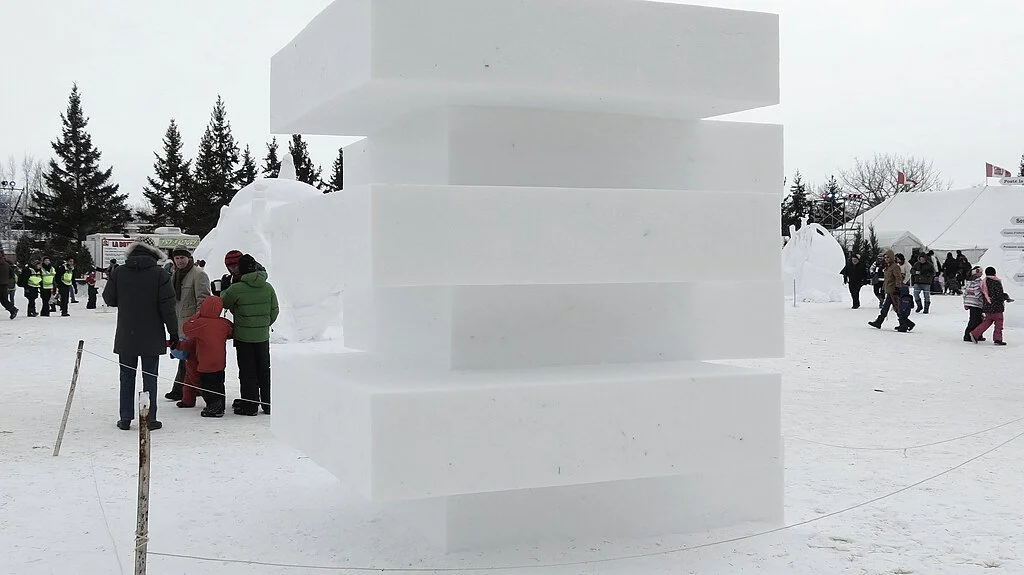
Festival du Voyageur. Whittier Park, St. Boniface, Winnipeg, Manitoba, Canada (February 2014). Image credit: Robert Linsdell from St. Andrews, Canada, CC BY 2.0, via Wikimedia Commons
As a city ward of Winnipeg, the capital of Manitoba, St. Boniface maintains its Francophone identity through cultural institutions, events, and the home of western Canada’s only French-language university, the University of St. Boniface. The Centre culturel Franco-Manitobain (CCFM) has been a hub for Francophone culture since 1974, hosting an annual film festival each autumn called Cinémental . Nearby are the Centre du Patrimoine, a research center dedicated to the preservation of Francophone and Métis history, and the Musée de Saint-Boniface, a National Historic Site of Canada located in the former convent of the Sisters of Charity of Montreal.
The Festival du Voyageur brings crowds to Whittier Park in Winnipeg each February for a ten-day celebration of Canada’s fur-trading history and the vital role of voyageurs. Official Voyageurs dress in period clothing and serve as ambassadors for the festival. Visitors can attend art exhibits and music and dance performances, primarily by Indigenous and Francophone artists, view or participate in wood carving and ice sculpture workshops and demonstrations, and cheer on contestants in fiddling and jigging (folk dance) competitions. Nearly everyone seems to enjoy maple taffy treats made from maple syrup and fresh snow on a stick!

Ceinture fléchée / Arrow sash handmade in 2007. Image credit: Ceinture fléchée, CC BY-SA 3.0, via Wikimedia Commons
A highlight of the Festival du Voyageur is the array of snow and ice sculptures around the city. Winnipeg hosts a snow sculpture symposium leading up to the festival to create sculptures for the event that are visually appealing as well as several interactive pieces, such as slides and tunnels, for young festival-goers to play among. In 1972, an ice sculpture of a voyageur’s boots and toque inspired the creation of the festival’s official mascot named Léo La Tuque, a red figure in the form of a hat, boots, and arrow sash (ceinture fléchée) that were typical of voyageur clothing. The success of the Festival du Voyageur prompted the construction of a permanent building in Whittier Park where Fort Gibraltar had stood in the early 19th century. This interpretive center, the Maison du Bourgeois, welcomes the public and school groups to learn about the area’s history and serve as a community space.
Farther west in Edmonton, Alberta, the Flying Canoë Volant also combines winter activities with the legacy of the coureurs de bois, voyageurs, Indigenous peoples, Métis, and French who contributed to local history. This winter festival pays homage to a multicultural legend, La Chasse-galerie, adapted from various folk tales whereby a group of lumberjacks enter into a pact with the devil to return to their loved ones at home by flying canoe but cannot mention God or touch a church steeple during the journey or their souls will belong to the devil. Several days of food (including maple taffy), cultural performances, colorful light displays, and ‘flying canoe’ races on snow-covered paths highlight Edmonton’s French Quarter and North Saskatchewan River valley, capturing the joy of the winter season while celebrating local heritage and the Franc0-Albertan community.
Activité de français
For nearly forty years, David MacNair and Gary Tessier have honed their snow sculpting skills, which they shared with thousands by creating numerous works for the 2025 Festival du Voyageur. Watch the English-language video below to hear and see how their efforts contributed to the spirit of the annual event.
Subscribe to our newsletter to receive Art de vivre posts, information about courses, Conversation Café, special events, and other news from l’Institut français d’Oak Park.