

Les origines françaises du ballet
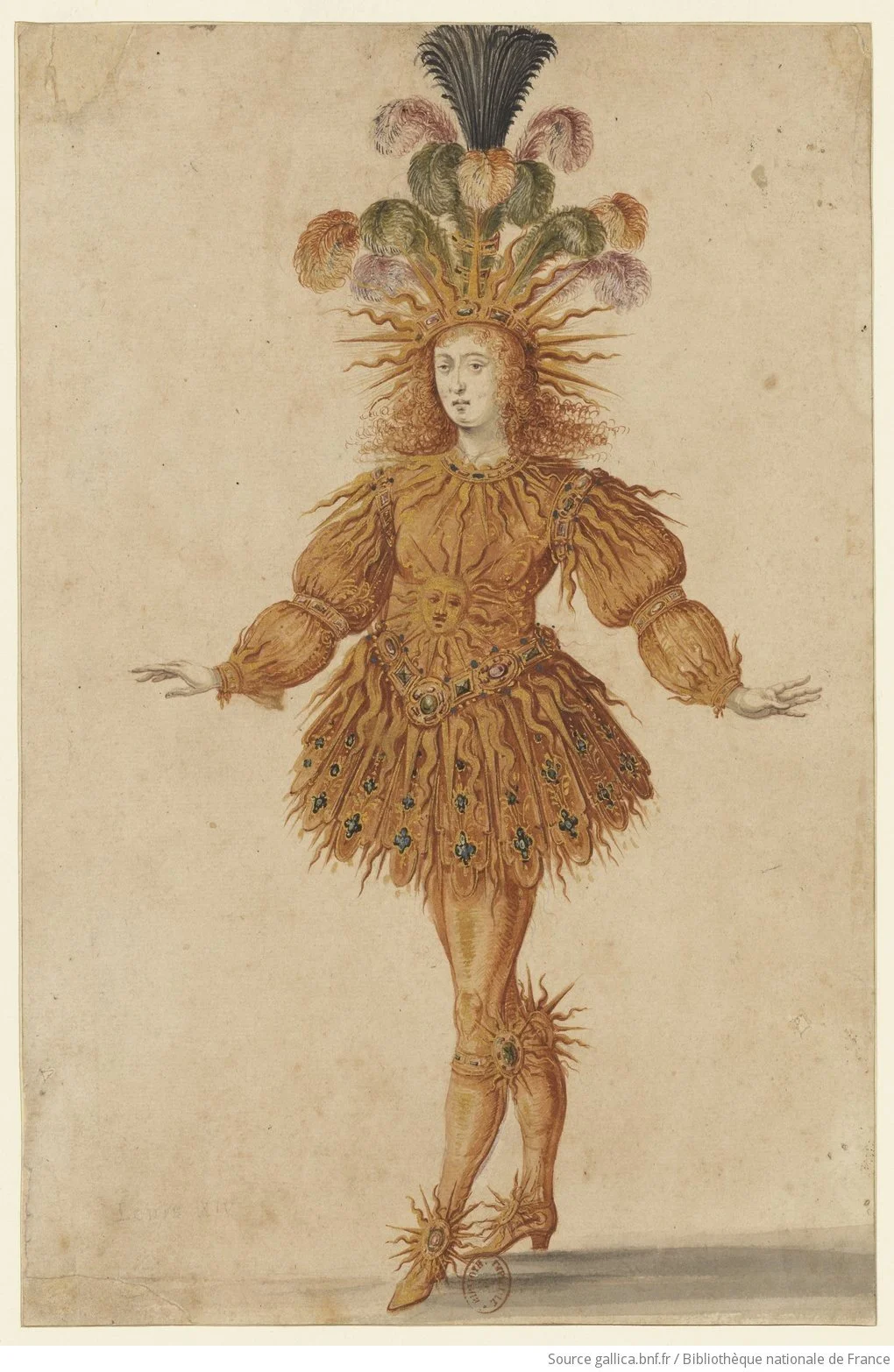
King Louis XIV of France in Le Ballet de la nuit, 1653. Image credit: Henri de Gissey, Public domain, via Wikimedia Commons
Plié and pirouette, grand battement and grand jeté, relevé and rond de jambe. These terms and numerous others are universally known to ballet dancers worldwide who otherwise may not be familiar with the rest of the French language thanks to the royal courts of France that supported the art of ballet from the time of Catherine de’ Medici, Queen of France in the mid-16th century. At the time, ballet was an aristocratic art form based on dances of the courts in modern-day Italy and France. Nobles were expected to learn social dances and occasionally joined in ballet performances. Although ballet originated in Italy, France cemented its role in ballet history during the reign of King Louis XIV, who received dance instruction as a child and championed ballet throughout his 72-year reign as the Sun King of France. Ballet subsequently expanded elsewhere in Europe and beyond with its shared terminology being only one of the aspects that demonstrate the French influence on this lasting art.
“L’État, c’est moi.” To impose his position as unquestioned leader, Louis XIV wielded ballet as a method of controlling the nobles who could pose an internal threat to his power. The teenaged king first danced publicly in 1653 as Apollo, the sun god, in a thirteen-hour spectacle called Ballet Royal de la Nuit. He displayed his athletic and aesthetic prowess while making it clear that he was to be held in esteem as godlike. Until 1670, the king continued to take daily lessons from his instructor, Pierre Beauchamp, setting an example for others to keep up with their own dancing skills. The pair regularly introduced new dances that nobles were required to spend time mastering to the detriment of practicing fencing and horsemanship, key elements of military preparation that could be used against the king. Louis XIV established ballet as a principal element of court life where the nobles’ demonstration of their dancing skills also prevented them from spending time at their own homes where they could build a competing power base. The Sun King extended the physical rigor and precision of ballet from the performance floor to court rules and practices that dictated how court attendees could make entrances, where they could stand or sit, and how they were permitted to dress, leaving no doubt as to who was in charge at all times.
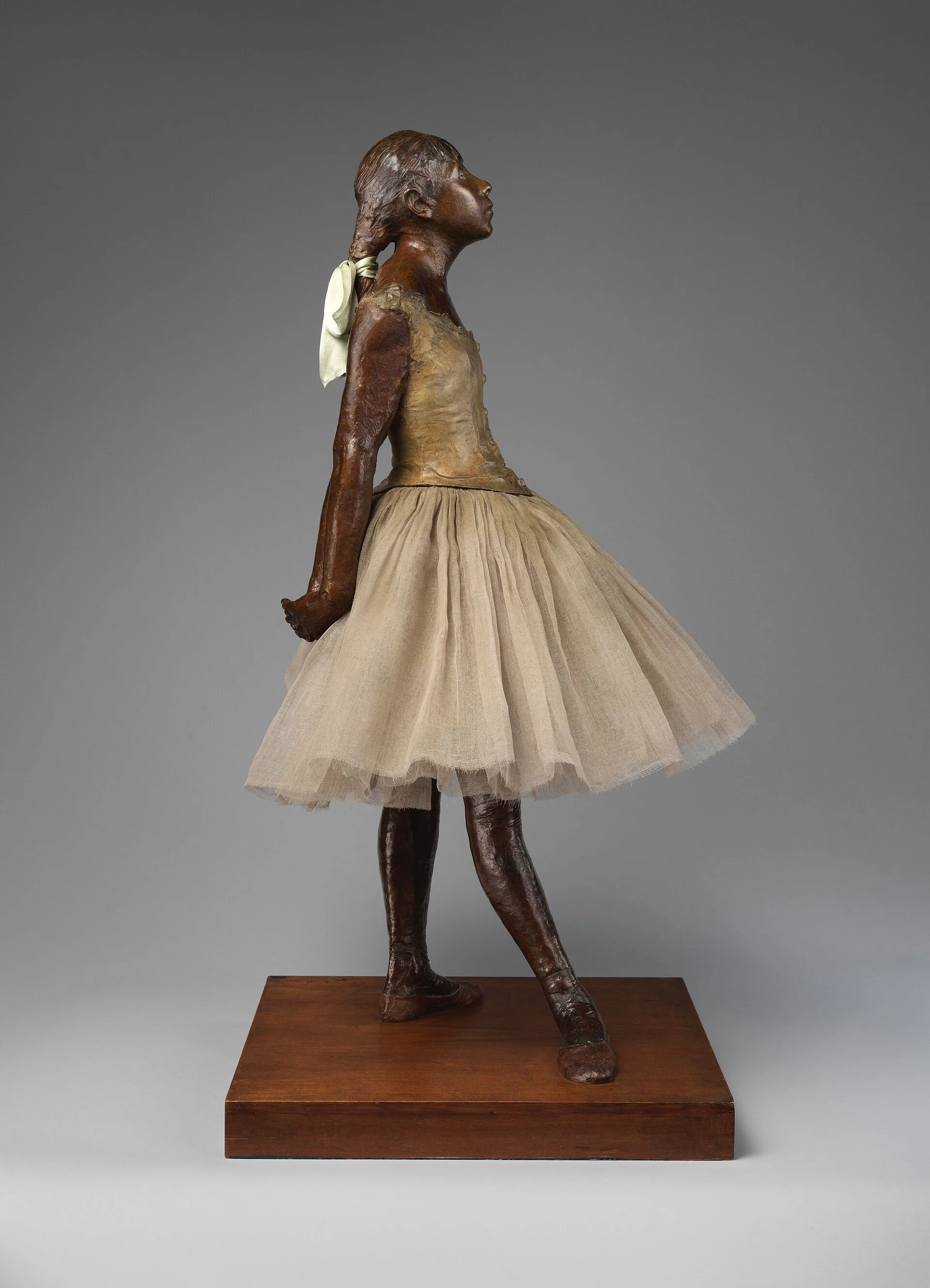
Degas, Edgar. The Little Fourteen-Year-Old Dancer, 1922. Metropolitan Museum of Art, New York, USA. Image credit: Edgar Degas, CC0, via Wikimedia Commons
In 1661, Beauchamp was named master of the Académie Royale de Danse that was established by royal edict to officially uphold the cultural and societal importance of dance. Administered by a team of thirteen dancing masters, many of whom had performed in the Ballet Royal de la Nuit with the king, the Académie and its counterpart, the Académie de la Musique led by composer and choreographer Jean-Baptiste Lully, marked the start of spreading performing arts beyond the royal court into professional venues with specialized performers. The successor to the dance division of the Académie de la Musique is still in existence as the venerated Paris Opéra Ballet, one of the premier ballet companies in the world.
Beauchamp is credited with authorship of the five basic ballet positions and creating the foundation for standardized notation so that dances could be ‘transcribed’ onto paper. This allowed choreographers to receive creative credit as well as providing the basis for others to recreate works with fidelity. Lully, who had produced works for the royal court, composed operas with dance sequences and opened public dance roles to women. In partnership with the French playwright Molière, Lully introduced various forms of theatre that combined opera, dance, spoken narrative, and drama. Royal courts across Europe began to follow the lead of the French aristocracy by hosting performances and organizing their own professional dance companies.
Amidst the growing popularity of ballet, the preeminence of France in the ballet world continued into the 18th century. Queen Marie-Antoinette selected French dancer-choreographer Jean-Georges Noverre as maître des ballets of the Paris Opera in 1776. Sixteen years prior, Noverre and several colleagues had produced a treatise calling for changes to a number of ballet traditions. Their argument within Lettres sur la danse, et sur les ballets promoted logical storylines that remained coherent throughout each ballet, dancers’ attire that were consistent with the plots as well as complementary to, not restrictive of, their movements, and regular collaboration among choreographers, composers, set and costume designers. Noverre also advocated for the consideration of the talents and artistic personalities specific to different dancers in addition to exacting technique and standards, believing that their expressiveness was an important element of the plot of each dance.
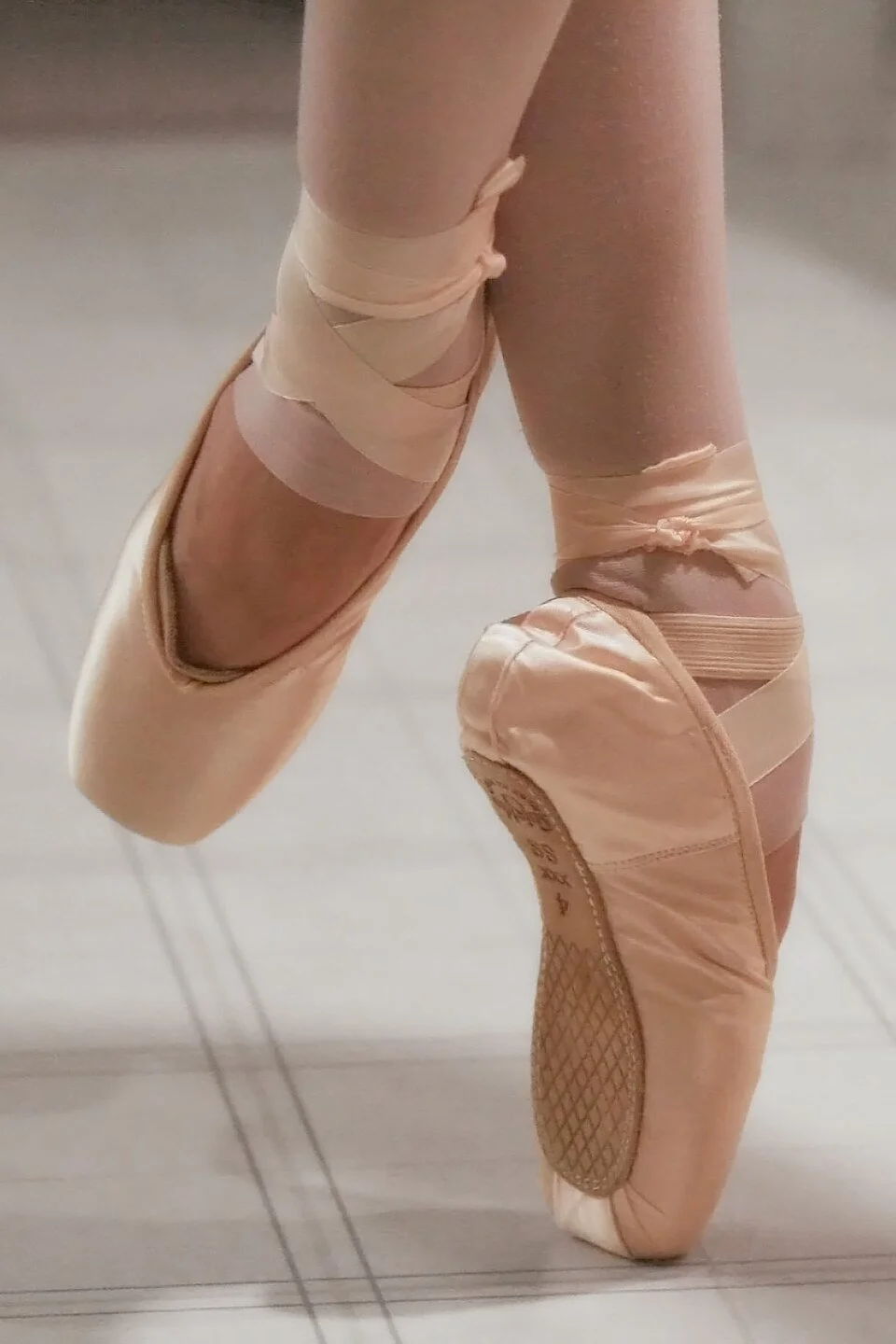
Modern pointe shoes, modeled by Daria L. Image credit: Lambtron (talk)The original uploader was Lambtron at English Wikipedia., Public domain, via Wikimedia Commons
These precepts were evident in the emergence of romantic ballets such as Giselle and La Sylphide which each premiered at the Salle Le Peletier of the Paris Opera in the 19th century. The latter was choreographed by Filippo Taglioni to highlight the talents of his daughter, Marie Taglioni, whose revealing (for the time period) apparel permitted audiences to view dancing en pointe for the first time. These two French classics have continued to be presented by ballet companies worldwide. The association of France and the art of ballet extended offstage by 1870, when the world of French ballet was extensively depicted in the artwork of Edgar Degas, a noted member of the Impressionist movement based in Paris. His drawings, prints, paintings, and sculptures of ballet scenes and dancers quickly found commercial and critical success, perhaps most notably in 1881 with the exhibition of his multimedia sculpture, Little Dancer, Aged Fourteen.
The enduring art of ballet has pushed into numerous countries and evolved to include varying interpretations and styles. In addition to the Paris Opéra Ballet, the Bolshoi Ballet and Mariinsky Ballet of Russia, the Royal Ballet of the United Kingdom, and the American Ballet Theatre enjoy prestige and veneration. Many other companies perform and train budding dancers while putting their own marks on traditional and contemporary works and pleasing audiences of all ages. Starting from the exclusive origins of ballet among the Italian and French aristocracy, ballet has proven its appeal to a wide population throughout the ensuing years.
Jeu de français
Once you complete the word search below of dance terms in French, the remaining letters will spell out the name of a classic ballet.
Subscribe to our newsletter to receive Art de vivre posts, information about courses, Conversation Café, special events, and other news from l’Institut français d’Oak Park.