
Let There Be Light
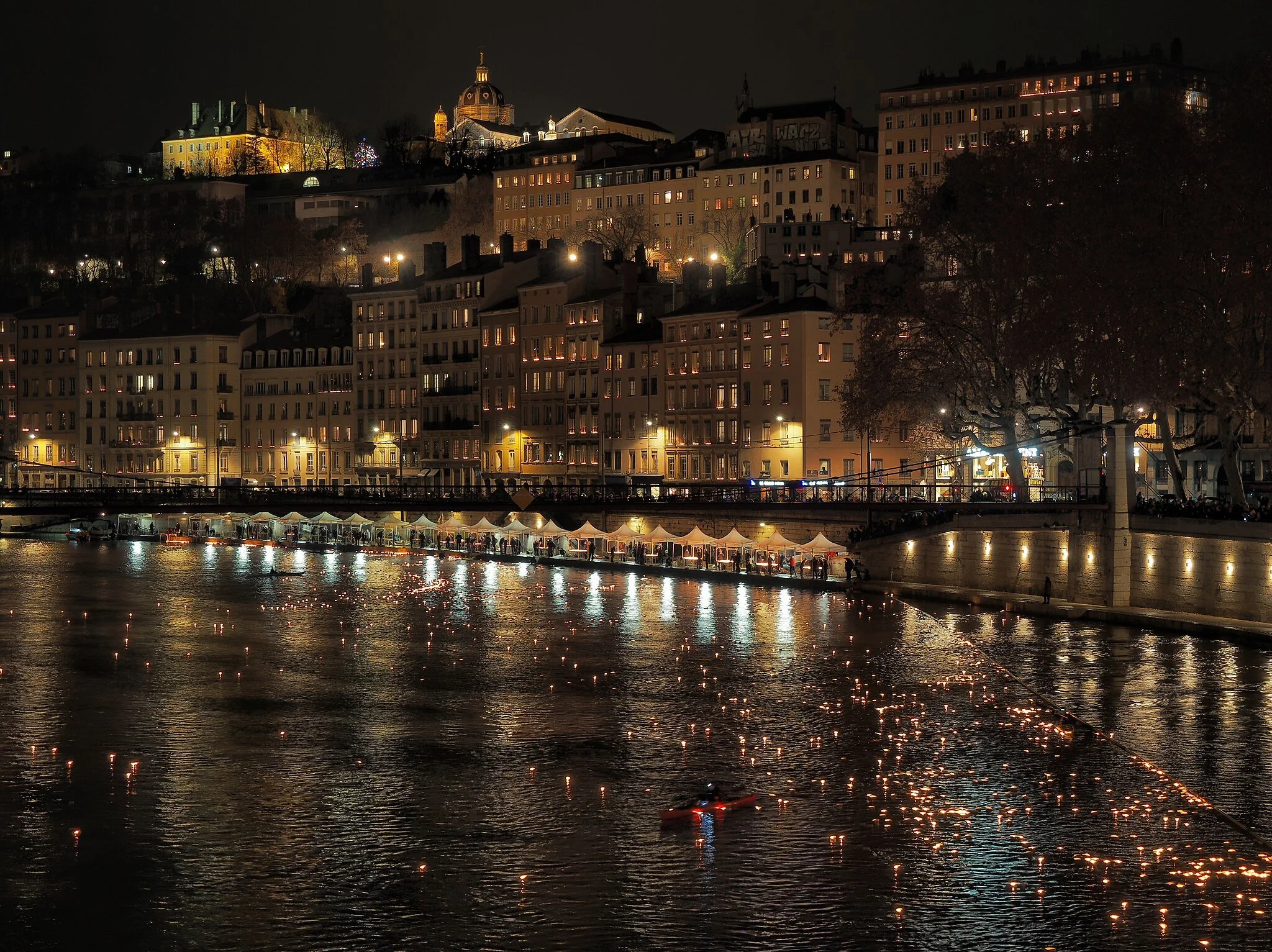
Lumignons along the Saône river during the Fête des Lumières (2019) in Lyon, France. Image credit: Dmitry Djouce, CC BY 2.0, via Wikimedia Commons
Christmas and New Year’s Eve are the most widely celebrated but not the only December holidays in France. As the days grow shorter, festivals of light offset the darkness of winter. France’s third largest city, Lyon, shines each December with its annual Fête des Lumières. The event originated in 1852 with plans for the dedication of a statue of the Virgin Mary at a chapel in the Basilica of Notre-Dame de Fourvière. The statue was to be unveiled and installed on September 8 of that year for the Feast of the Nativity of Mary but severe floods ruined part of the city, including the sculptor’s studio, forcing the ceremony to be rescheduled for the Feast of the Immaculate Conception on December 8.
The new date arrived with heavy downpours that threatened to disrupt the dedication once again, but the rain stopped as the evening ceremonies began. Many Lyonnais greeted this minor miracle by placing candles and lanterns in their windows, then proceeding outdoors to celebrate together and view the illuminated neighborhoods. Thus started a yearly tradition of placing ‘lumignons’ in windows in the days leading up to December 8. This practice became a municipal event in 1989 with official lighting displays and was christened the Fête des Lumières ten years later.
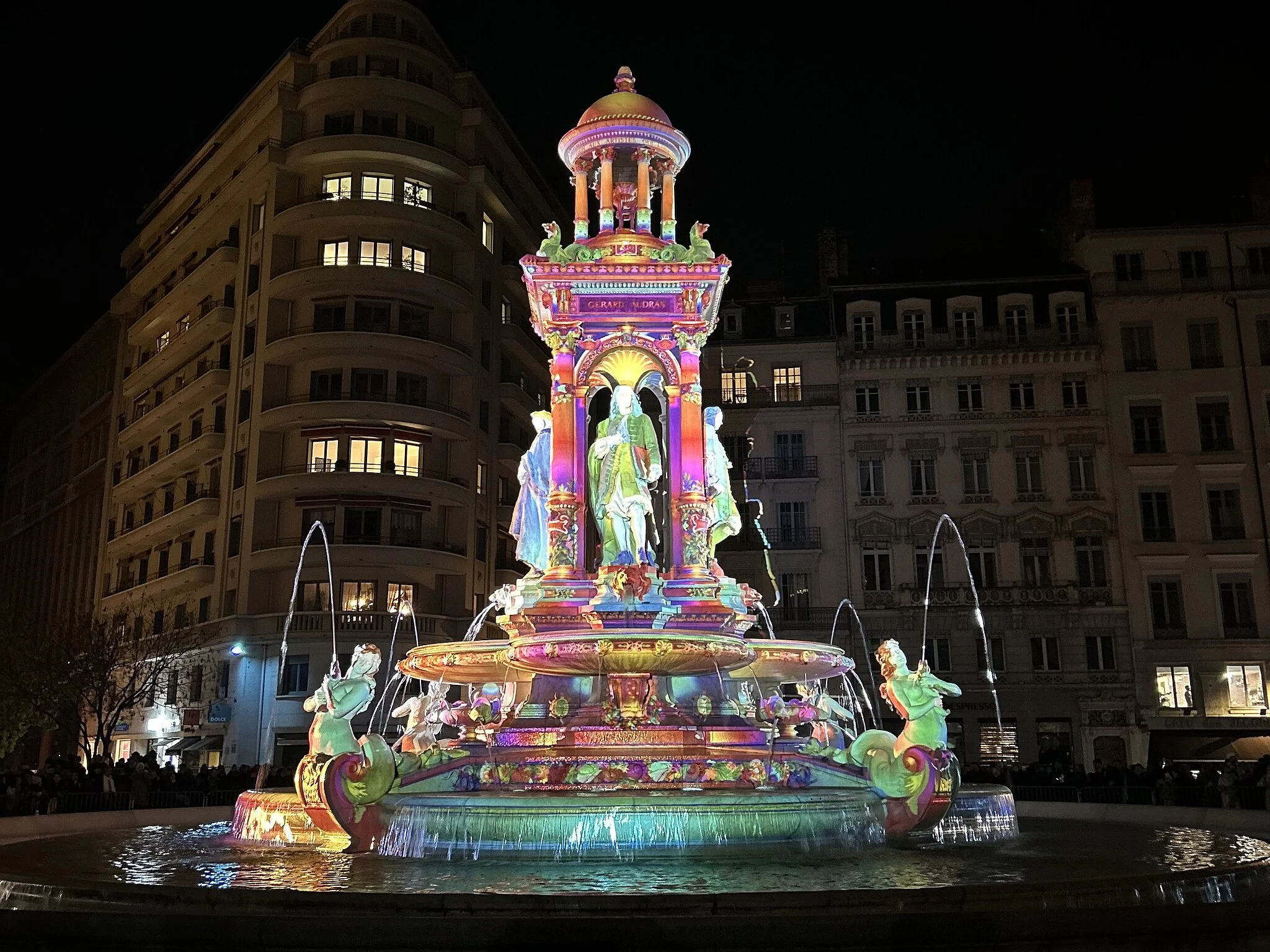
Fontaine de Jacobins, Lyon, France. Image credit: Corentin Eustacchi, CC BY-SA 4.0, via Wikimedia Commons
Several million visitors and residents now turn out for four days of light displays and shows, street food and mulled wine, music, and vendors between December 5 and 8. Government buildings such as the Hôtel de Ville (city hall) are bathed in light, lumignons adorn the windows of private residences and public spaces, and professionally designed installations light up city landmarks and squares. At sunset on the 8th, crowds gather in the Place St.-Jean with small lights or candles in hand. After Mass is celebrated in the Cathédrale St.-Jean, the Procession of the Virgin Mary ascends the hill leading to the Basilica of Notre-Dame de Fourvière.
Shortly after the conclusion of the Fête des Lumières, the renowned Avenue de Champagne in Épernay lights up with the Habits de Lumières, a light festival inspired by Lyon’s event but with the iconic beverage replacing the Virgin Mary on the center stage. This year’s festivities coincided with the 100th anniversary of the naming of the Avenue de Champagne, over a mile-long UNESCO World Heritage site lined with champagne houses, the town hall, and the Musée du vin de Champagne et d’Archéologie régionale located in the Château Perrier, a national historic monument and former home of Charles Perrier, son of the renowned champagne producers who founded Maison Perrier-Jouët. The avenue is transformed into a pedestrian zone open to the public for a long weekend of community fueled by open courtyards, light displays, music, food, and of course – champagne.
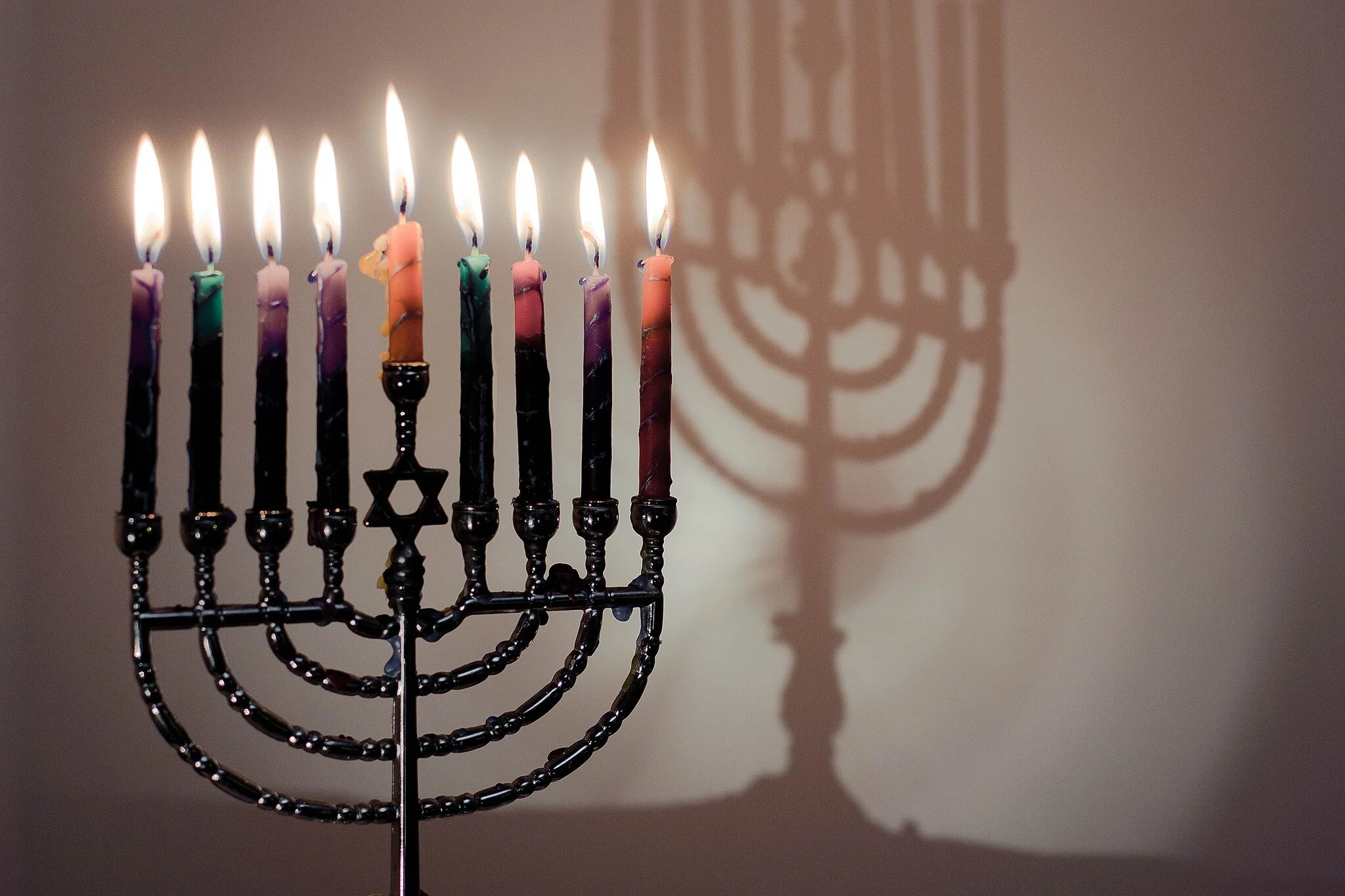
Hanukkah menorah on the eighth night. Image credit: Dov Harrington, CC BY 2.0, via Wikimedia Commons
Not unique to France but older than nearly every other festival is Hanoucca / Hanukkah, the Jewish Festival of Lights. France has the largest Jewish population in Europe with approximately half a million French Jewish people in Paris, Marseille, Lyon, and other areas of the country. In 168 BCE, the Temple in Jerusalem was defiled by soldiers of the Greek Syrian king Antiochus Epiphanes who converted it into a place of worship of Zeus and other Greek gods. When Judaism was prohibited, the Maccabees fought back to drive out the Syrian invaders despite unfavorable odds. Legend holds that the amount of oil remaining in the recaptured Temple was only sufficient for a single day’s burning but miraculously kept the flame that illuminated the ark of the Torah alight for eight days until the replenishing supplies could be secured. In commemoration, Hanoucca celebrates this historical triumph as well as signifying the persistence of light in times of darkness. Additionally, it serves as a reminder of keeping Jewish faith and traditions alive and thriving for current and future generations.
Hanoucca celebrations around the world also remind Jewish people of their solidarity even as they live in different countries among Gentiles. In France as elsewhere, Jewish families and synagogues light a nine-branch menorah over the eight days of Hanoucca, adding a branch each successive evening. The lighting of public menorahs over the holiday in every arrondissement of Paris is open to all, as are similar events in other French cities such as Strasbourg, whose Jewish community has one of the longest histories in France. Although the lights are often placed in windows to be visible to passersby, Hanoucca celebrations typically are more intimate gatherings at synagogues and with family and friends in contrast to the light festivals in Lyon and Épernay. Celebrants pray and sing songs together, donate to charity and give small gifts to children, and share traditional dishes such as latkes (potato pancakes), sufganiyot (jelly doughnuts), and kugel (noodle or potato casserole).
The dates of Hanukkah change each year according to the Gregorian calendar but always fall on the 25th day of Kislev, the ninth month of the Hebrew calendar. This year, France has been fortunate to experience a month filled with the joys of light from the first weekend of December in Lyon to the next in Épernay right into eight days of Hanukkah just before Christmas festivities precede New Year’s fireworks. All serve to bring beauty and warmth to the darker days of winter year in and year out.
Jeu de français
There is no need to shade your eyes while looking for twelve French words relating to the Festivals of Light mentioned in this post.
Subscribe to our newsletter to receive Art de vivre posts, information about courses, Conversation Café, special events, and other news from l’Institut français d’Oak Park.